
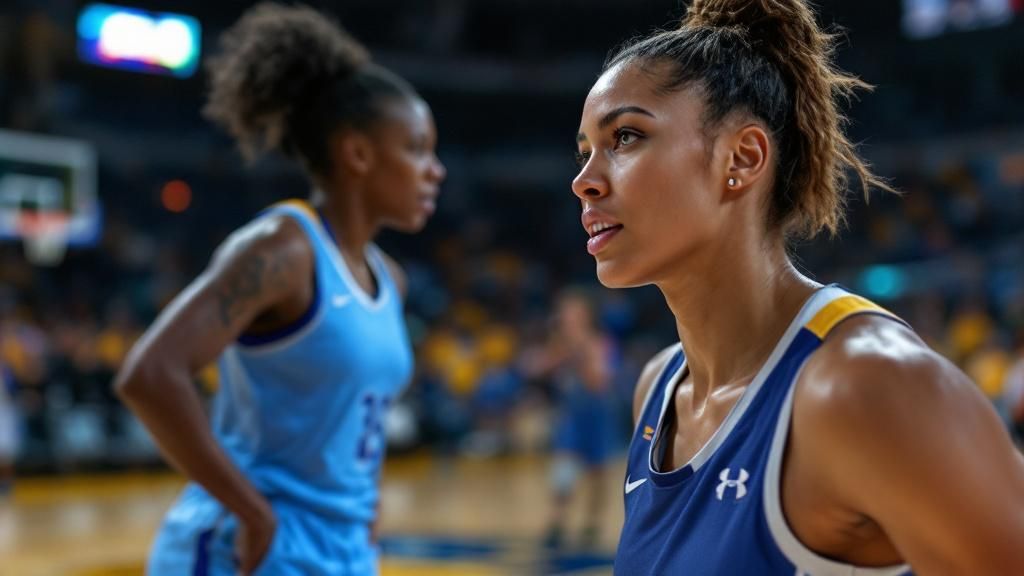
Women’s basketball players across the globe are increasingly vocal in their calls for equal pay and significant funding in their sport. Despite decades of athletic excellence and increasing spectator support, female athletes continue to earn significantly less than their male counterparts, whilst getting little media coverage and sponsorship opportunities. This article investigates the ongoing campaign for parity in professional basketball, analysing the institutional challenges players face, the monetary rationale supporting their demands, and the transformative changes needed to ensure women’s sport receives the acknowledgement and funding it rightfully deserves.
The Salary Disparity Challenge in Female Basketball
The wage disparity between male and female professional basketball players represents one of sport’s most prominent imbalances. Women participating in premier leagues earn considerably below their male counterparts’ salaries, with some players taking home annual wages well beneath the poverty line. This inequality goes further than core compensation to include sponsorship deals, endorsement opportunities, and broadcasting rights, creating a multiplying setback that damages career sustainability and professional development for female athletes.
Investment inequalities worsen the pay gap, with women’s leagues obtaining limited financial support for facilities, promotion, and athlete development initiatives. Whilst men’s basketball organisations benefit from significant TV agreements and corporate sponsorships, women’s teams struggle with constrained finances that restrict player numbers, standard of coaching, and facility standards. These institutional disparities sustain a cycle where inadequate financing creates reduced visibility, which in turn supports reduced funding, ultimately disadvantaging players who deserve fair pay for their skill, dedication, and entertainment value.
Capital Gaps and Press Attention
The financial gap between men’s and women’s professional basketball continues to be striking, with investment in women’s leagues significantly lagging behind their male counterparts. News outlets devote considerably less broadcasting hours to women’s matches, leading to diminished exposure and sponsorship revenue. This disparity encompasses facilities for training, infrastructure, and promotional spending, creating a repeating pattern where reduced funding generates limited visibility, which subsequently supports additional financial reductions. The consequence is a performance gap that damages the quality and growth potential of women’s basketball worldwide.
Media reporting plays a crucial role in establishing the commercial sustainability of any sport, yet women’s basketball receives a fraction of the airtime dedicated to men’s matches. Major television companies often place women’s matches at inconvenient times or consign them to subsidiary networks, restricting audience size and engagement. This coverage gap directly affects sponsorship possibilities and merchandise sales, leaving female athletes with fewer financial rewards. Addressing these inequalities requires strategic investment from media companies, broadcasters, and commercial partners who recognise the untapped potential and growing fanbase within women’s professional basketball.
Activist Players and Upcoming Outlook
Women’s basketball players have emerged as strong voices for systemic change, leveraging their platforms to confront entrenched inequalities and inspire unified movements. Players such as Sue Bird and Diana Taurasi have established themselves as prominent voices for fair financial support, leveraging their prominence to underscore the difference between professional basketball for men and women. Their activism has catalysed productive discussions amongst administrative organisations, sponsors, and media outlets, proving that athlete unity can deliver concrete results. Through organised campaigns and public advocacy, these athletes steadily intensify calls for far-reaching change across financial remuneration, infrastructure, and transmission agreements.
The path ahead of women’s basketball depends upon sustained commitment from diverse organisations committed to authentic transformation. Progressive policies implemented by leagues such as the WNBA—including higher pay ceilings and enhanced promotional efforts—offer valuable frameworks for worldwide federations. However, considerable barriers remain, requiring ongoing advocacy from players, supportive organisations, and active advocates. The trajectory of women’s professional basketball will ultimately reflect the commitment to fairly support female athletes, recognising both their outstanding ability and their essential role to sport’s place in society.
Moving ahead, the intersection of player activism and organisational reform offers unprecedented opportunities for transforming professional basketball’s future. By sustaining progress and demanding accountability, women athletes continue paving pathways towards true parity, inspiring younger generations whilst fundamentally transforming perceptions of women’s sport globally.
